
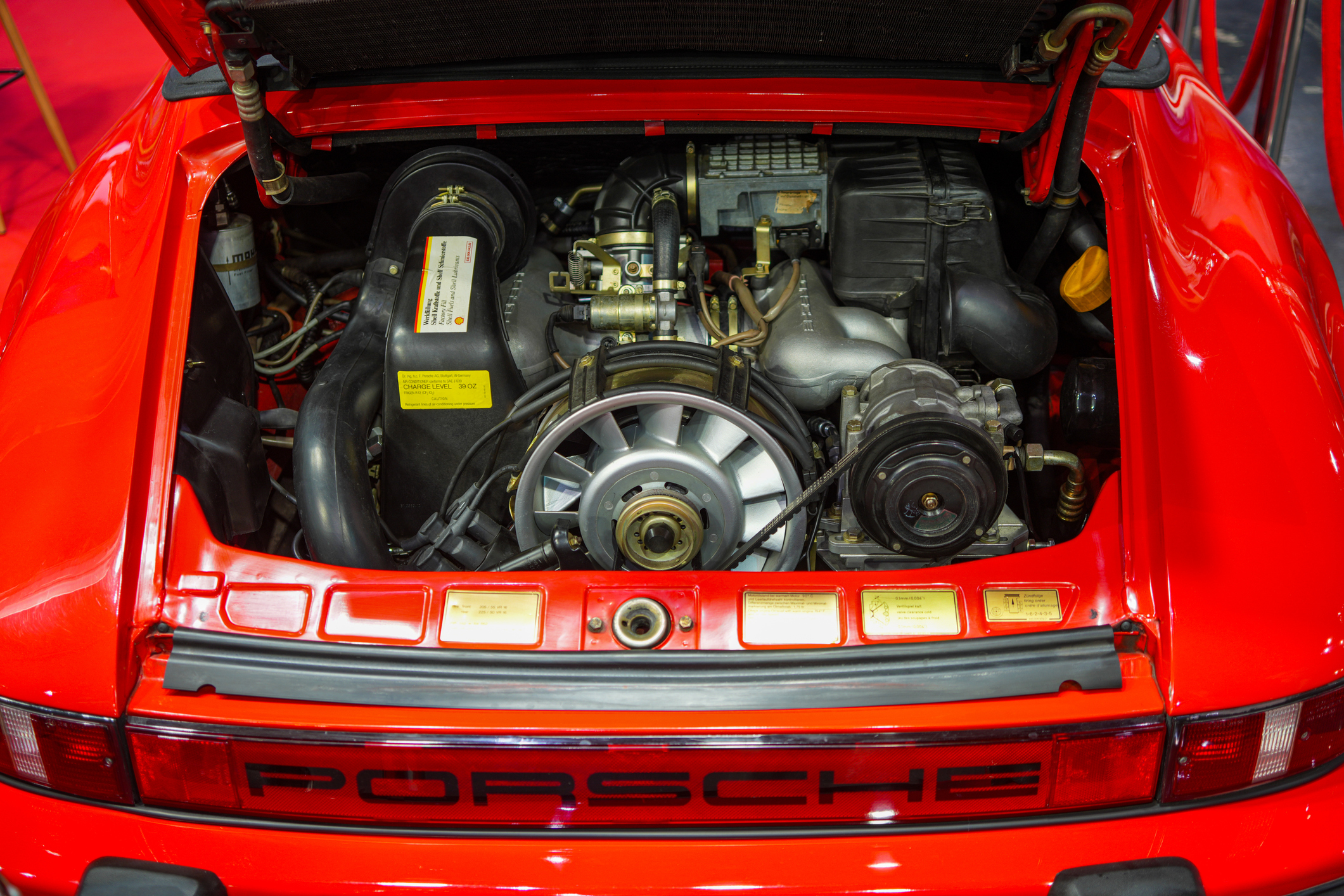
If you own a Porsche 996 Turbo, 997 Turbo, GT2, or GT3, you are likely aware that you possess a piece of automotive royalty. Under the rear decklid lies the legendary Metzger engine (designated GT1), a powerplant revered for its racing pedigree and robust performance.
However, even royalty has its vulnerabilities. Ask any Porsche specialist, and they will tell you about the one significant weak point in this otherwise bulletproof block: the glued coolant lines.
At McIlvain Motors in Tempe, AZ, we have spent years mastering the definitive solution to this problem. We are here to explain what the issue is, why the “time bomb” analogy is accurate, and why our Porsche Coolant Line Pinning Service is the gold standard for prevention.
The Problem: Why Does Porsche Use Glue on a $150,000 Car?
When Porsche designed the water-cooled GT1 engine for the 996 and 997 generations, they utilized an adhesive to bond the aluminum coolant inlet/outlet tubes into the engine block. Unlike a traditional press-fit or welded connection, these tubes are essentially “glued” in place.
While this worked for factory testing, it fails to account for the long-term realities of heat cycling and high-performance driving.
The “Time Bomb” Scenario
- Here is the mechanical reality: Over time (typically 30,000 to 60,000 miles), the constant expansion and contraction of the engine block causes that adhesive to become brittle. The bond breaks down.
- One day—usually under heavy throttle or high heat—the coolant pressure will literally push the pipe out of the engine block.
The Consequences of Failure
When that pipe blows out, the results are immediate and terrifying:
- Instant Coolant Loss: The engine dumps its coolant in seconds.
- Overheating: If you don’t shut it off instantly, you risk a catastrophic engine meltdown.
- Loss of Traction: As noted by experts at Sharkwerks, the coolant sprays directly onto the rear tires, causing a high-speed spin or crash on track . This is not a matter of if, but when.
The Solution: Mechanical Pinning vs. Welding
When it comes to fixing these pipes, the Porsche community has long debated two methods: Welding vs. Pinning.
- Welding: Involves melting the aluminum pipes to the block. While strong, the block and pipes are often different alloys. This can cause micro-fractures or distortion in the soft aluminum casting if not done by a metallurgical expert.
- Pinning (The McIlvain Method): This involves drilling small, precise holes through the connection point and installing mechanical set screws (pins) to physically lock the pipe into the block.
Why McIlvain Motors Prefers Pinning
At McIlvain Motors, we advocate for the pinning method for most street and track-driven cars.
According to PCA (Porsche Club of America) technical experts, pinning is not only easier on the integrity of the block but has proven just as reliable as welding when performed correctly. It provides a mechanical backup to the glue. Even if the adhesive fails, the metal pin holds the pipe in place.
The Mcilvain Motors Difference: Precision over Patchwork
We are proud to be Tempe’s trusted source for Porsche service since 1919. When you bring your 911 Turbo or GT3 to us for coolant line pinning, you aren’t getting a “quick fix.” You are getting a comprehensive engine service.
Our Process
- Engine Removal: We do not cut corners. To access all the vulnerable pipes (especially the notorious curved pipe behind the alternator), we carefully remove the engine from the vehicle.
- Full Inspection: Once the engine is on the stand, we inspect every single coolant connection. We identify any pipes that have already begun to shift or leak.
- Precision Drilling & Pinning: Using high-grade materials, we mechanically secure each pipe.
- Preventative Overhaul: While the engine is out, it is the perfect time to address other maintenance items, saving you thousands in future labor costs.
Do You Need This Service?
While the Metzger engine is the primary culprit (996/997 Turbo, GT3/GT2), high-performance driving accelerates the risk. You should consider this service if:
- You track your car (mandatory for safety).
- Your car is approaching or exceeding 40,000-50,000 miles.
- You smell coolant but can’t find a leak (early warning sign).
Your engine is already out for a clutch replacement (we highly recommend pinning proactively during this time) .
Drive Without Fear
Your Porsche was built to be driven hard and fast. Don’t let the anxiety of a coolant line failure hold you back or, worse, ruin your engine and your track day.
At McIlvain Motors, we combine decades of experience with honest, fair pricing. As one of our customers noted, we are known for “excellent service and extremely fair pricing for top quality Porsche service”. We are PCA-certified driving instructors and master mechanics—we treat your car the way we would drive it ourselves.
Don’t wait for the steam cloud. Stop worrying and start driving.
Contact Mcilvain Motors in Tempe, AZ, today to schedule your Porsche Coolant Line Pinning Service.