
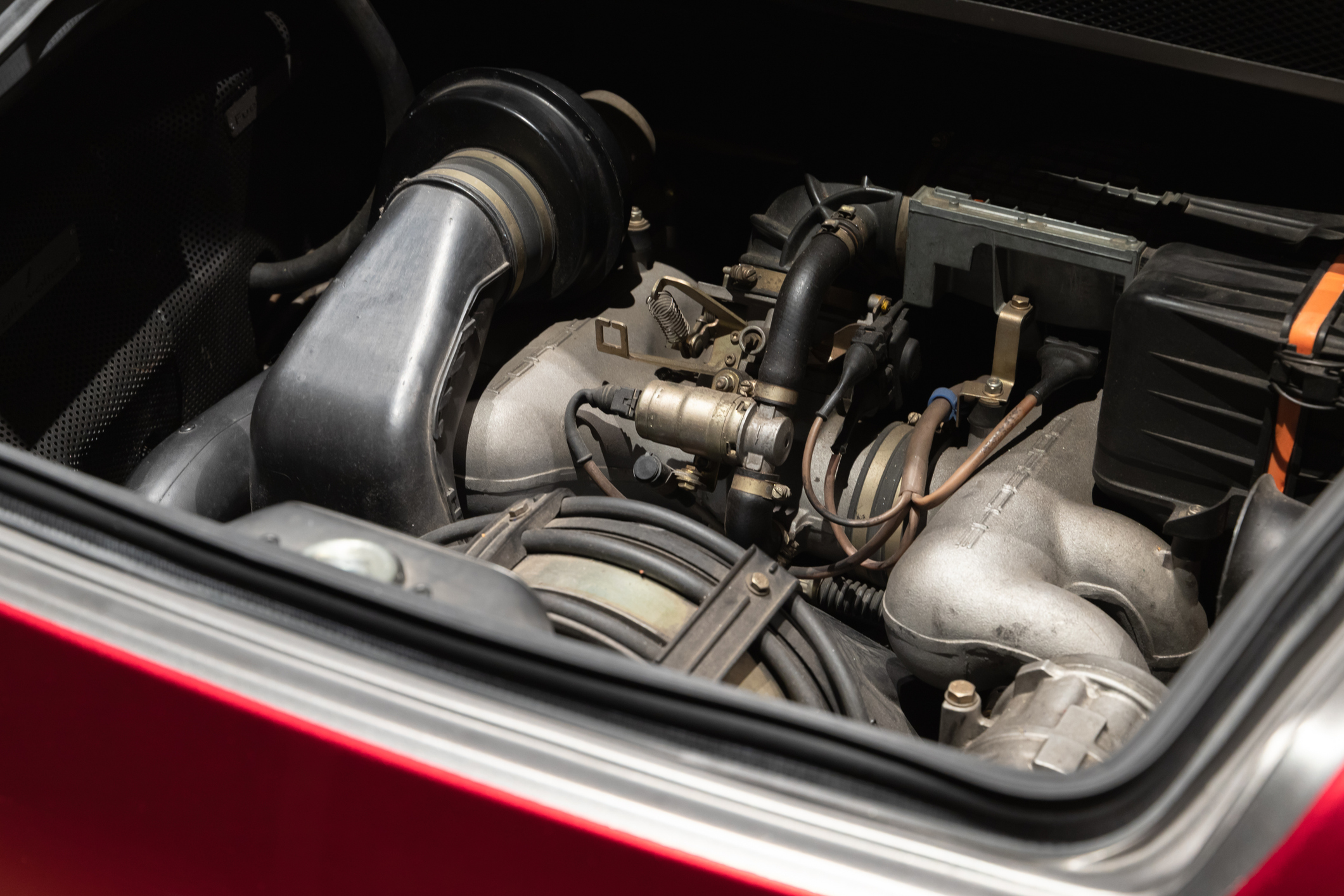
The Silent Threat in Your Garage: Why Phoenix Heat is the Enemy of Your Porsche’s Cooling System
Living in the Valley of the Sun has its perks—endless sunshine and beautiful winter driving weather. However, for a precision machine like a Porsche, the extreme Phoenix heat is a brutal stress test. While you rely on your AC, your Porsche relies on its coolant system to keep that flat-six or turbocharged engine running at optimal temperatures. When that system fails, you don’t just face an overheated engine; you face catastrophic repair bills.
At McIlvain Motors, we see it every summer: Porsches towed in with steam rising from the hood. The culprit? Almost always a Porsche coolant leak. If you live in Phoenix, Scottsdale, or Mesa, recognizing the early signs of a coolant leak isn’t just maintenance—it’s survival for your investment.
How to Spot a Coolant Leak Before You See the Red Dashboard Light
Porsche coolant systems are complex. They aren’t just rubber hoses like old domestic cars. They involve plastic water pumps, expansion tanks, and intricate fittings. Because Phoenix asphalt regularly hits 160°F+, these components become brittle.
Look for these three warning signs:
- The Sweet Smell: If you smell maple syrup or a sweet chemical odor inside the cabin or near the front trunk, coolant is vaporizing on a hot engine component.
- The Puddle: Pink, purple, or neon green liquid under the front axle. Unlike oil (which is dark and slick), coolant evaporates slowly.
- Bubbles in the Overflow Tank: After a drive, pop the rear trunk (for 911s) or open the hood (for Cayenne/Macan). If you see constant bubbling or the coolant level is mysteriously low without visible external leaks, you may have a blown head gasket or internal leak.
Why Regular Shops Fail at Porsche Coolant Repair
You can take a Honda Civic to any shop in Phoenix for a radiator patch. But a Porsche is different. Using generic clamps, the wrong coolant mixture, or failing to vacuum-bleed the system properly will leave air pockets in the engine. In a Porsche, air pockets = hot spots = warped cylinder heads.
This is why McIlvain Motors is the preferred choice for Porsche coolant leak repair in Phoenix. We don’t “fix leaks.” We restore the engineering integrity of your German vehicle.
Our Unique Approach to Porsche Coolant System Restoration
Unlike chain shops that slap on a sealant (a mortal sin for Porsche engines), McIlvain Motors follows a 4-step diagnostic and repair protocol:
- UV Dye & Pressure Test: Phoenix heat causes micro-cracks. We use professional UV dye and a 30-psi nitrogen pressure test to find leaks that are invisible to the naked eye—common in Porsche 996/997 coolant pipes and Cayenne thermostat housings.
- OEM Component Replacement: We never use “universal” hoses. We replace failing parts with OEM Porsche or Genuine German aftermarket components. If your water pump is weeping, we will replace it. If the plastic coolant lines on your Panamera are brittle, we will upgrade them.
- Full System Flush (Phoenix Formula): The desert requires a higher boiling point. We flush out the degraded coolant and refill with the specific Porsche-approved antifreeze mixed with distilled water (tap water in Phoenix is too hard and will corrode your engine block).
- Vacuum Filling: We use a vacuum filler tool to pull a vacuum on the system before introducing new coolant. This ensures zero air pockets—the #1 cause of post-repair overheating in the Valley.
The Most Common Porsche Leaks We Fix in Phoenix
Unlike a standard V6 or V8 engine, where the coolant flows through cast iron or thick aluminum blocks, Porsche engines—especially the flat-six “boxer” engines found in the 911, Boxster, and Cayman—are engineered with extremely tight tolerances.
- Porsche 911 (997/991): Coolant hose to the throttle body.
- Porsche Cayenne (955/957): Plastic coolant pipes under the intake manifold.
- Porsche Panamera: The notorious “center coolant line” failure.
- Porsche Macan: Water pump seepage and thermostat housing cracks.
- Boxster/Cayman: Front radiator stone damage and expansion tank cracks.
Don’t Wait for the Overheat Warning
In Phoenix, a slow drip becomes a major blowout within days. When that warning light flashes red, you have seconds to shut the engine off before you warp the heads. A $500 coolant leak repair at McIlvain Motors can prevent a $15,000 engine rebuild.
Porsche engineers rely heavily on composite plastics and reinforced nylon for critical components like the coolant expansion tank, the water pump impeller, and the quick-connect hose fittings.
These materials work beautifully in Stuttgart’s moderate climate. But Phoenix? We have 120-degree days followed by 80-degree nights. That 40-degree temperature swing causes plastic to expand and contract violently.
Why Phoenix Drivers Trust McIlvain Motors
The cooling passages are narrow, the cylinder walls are thin, and the engine sits low to the ground. When a coolant leak occurs, it doesn’t just drip onto your garage floor; it sprays onto hot exhaust components, catalytic converters, and oxygen sensors.
- Specialized Diagnostics: We own factory Porsche scan tools (PIWIS).
- ASE Master Technicians: Not general mechanics—German specialists.
- Local Reputation: Family-owned, serving the East Valley with honesty.
- Warranty: Every coolant repair comes with a 24k/24-month parts-and-labor warranty.
Ready to Beat the Heat?
Don’t let a simple coolant leak ruin your weekend drive up to Sedona or Flagstaff. Whether you drive a classic air-cooled 993 or a modern Turbo S, McIlvain Motors has the experience to keep you cool.
Call McIlvain Motors today for a Porsche Coolant System Inspection in Phoenix. Driven by passion and repaired by experts.